

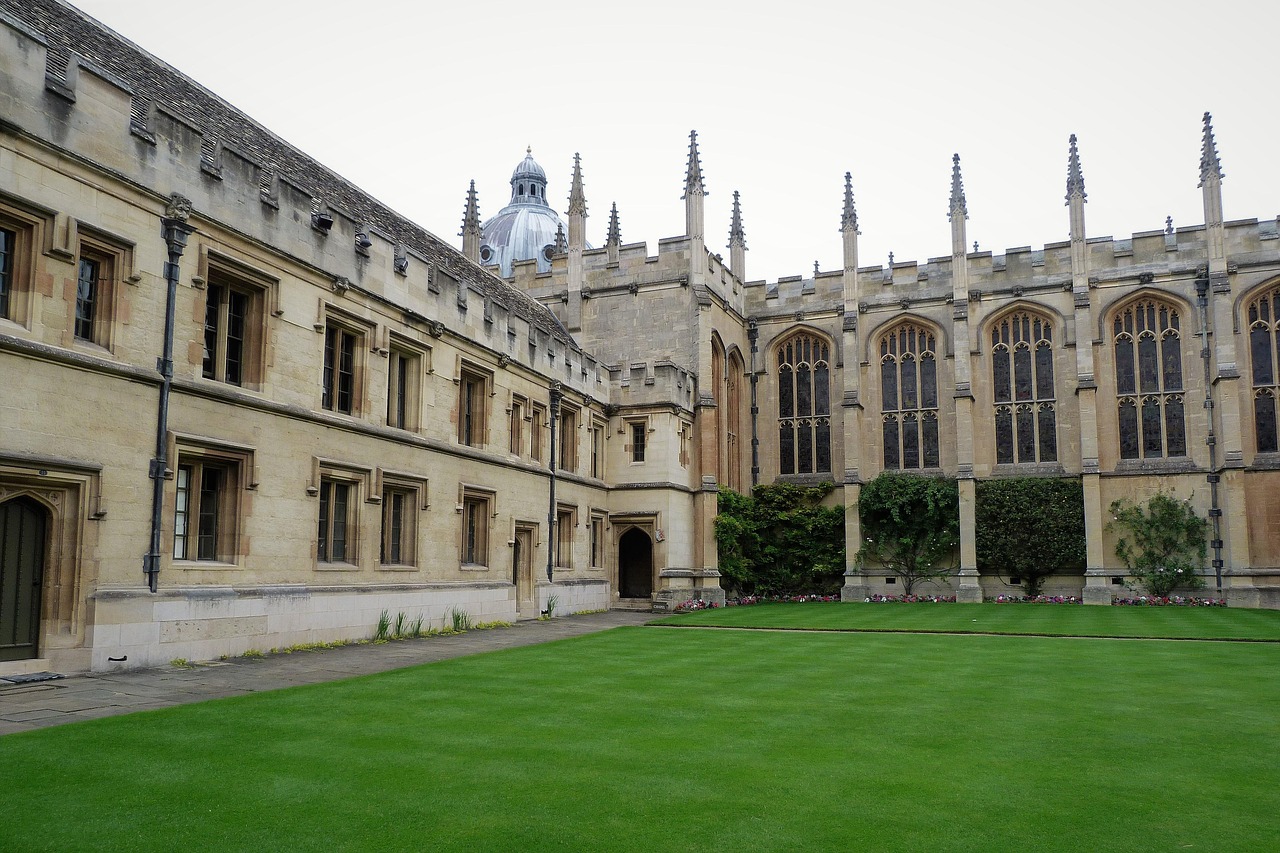
Oxford is one of the world’s great universities – a place where students engage with some of the finest minds in their field, study in one of the most beautiful and historic cities in Europe, and benefit from a tutorial system that has shaped thinkers, leaders, and innovators for eight centuries. It is the oldest university in the English-speaking world, and for ambitious students who love their subject, few environments are more stimulating or more awe-inspiring.
It is also, of course, genuinely difficult to get into. Oxford admits roughly 14% of undergraduate applicants overall, and around 8% of international candidates. Admission depends on strong academic grades alongside performance in admissions tests, the UCAS personal statement, written work where required, and the interview. Each stage is designed to assess how you think, not just what you know.
Students from more than 175 countries are enrolled at Oxford, and over a third of undergraduate applications come from outside the UK. For international applicants, the process involves additional considerations: qualification equivalencies, English language requirements, higher tuition fees, and in some cases government-imposed limits on available places. This guide provides an introduction to what every applicant, domestic and international, needs to know. To discuss your own specific case and application to Oxford or other top universities, reach out to us at Fortuna for a free 30 minute consultation.
How Competitive Is Oxford, Really?
The latest Oxford admissions statistics show that the level of competition differs substantially across subjects. The table below shows offer rates by course, drawn from the Oxford Annual Admissions Statistical Report (June 2025), which aggregates data across the 2022 to 2024 admissions cycles.
| Course | Applicants per Place (2022–2024 avg.) |
| Economics and Management | 19.1 |
| Computer Science | 17.2 |
| Mathematics and Computer Science | 11.9 |
| Biomedical Sciences | 11.7 |
| Medicine | 11.1 |
| Mathematics | 10.5 |
| Law | 10.0 |
| Physics | 8.6 |
| History and Politics | 8.6 |
| Biochemistry | 8.5 |
A candidate applying to Economics and Management or Computer Science faces a different competitive environment from one applying to History or Modern Languages. Furthermore, the odds are tougher for international applicants, as they are admitted at less than half the rate of domestic applicants (around 18% of UK applicants receive offers, compared to roughly 8% of international applicants).
Bear in mind, too, that the Oxford applicant pool is highly self-selecting. Students can apply to a maximum of five universities in the UK, so UK-based applicants in particular tend to apply to Oxford or Cambridge only when they have a very strong, competitive profile. The offer rates above therefore reflect competition among an already well-qualified field.
Understanding the Oxford Admissions Process
Oxford’s admissions process differs in several important ways from most national university systems. All applications are submitted through UCAS – the Universities and Colleges Admissions Service, the UK’s centralized undergraduate application platform – and are subject to its rules and deadlines. For applicants outside the UK, UCAS is likely an unfamiliar system, so understanding how it works is an early priority.
You Can’t Apply to Both Oxford and Cambridge
UCAS rules prohibit applying to both Oxford and Cambridge in the same application cycle, with very limited exceptions for organ scholars. Choosing between them, as well as selecting the right course and college, is a critical early decision. A Fortuna coach can help you think through the differences and make an informed choice.
Earlier Deadlines
Given that the Oxford (or Cambridge) application deadline falls in mid-October, nearly three months before the standard January deadline for other UK universities, applicants need to prepare their personal statement, academic reference, predicted grades, and admissions tests much earlier in their final year. For international applicants, who may also be managing applications to universities in their home country or elsewhere, the timeline can be particularly demanding. Starting preparation well in advance is essential.
The College System
Oxford is made up of 29 undergraduate-admitting colleges, and applicants are required to either select a specific college to which they wish to apply, or submit an open application. Nearly a fifth of applicants choose an open application, which Oxford allocates to a college with fewer direct applications for the chosen course. Each college has its own academic community, accommodation, and character. Your college largely determines who tutors you, where you live, and your community for your three or four years at Oxford.
College choice can have an impact on admission chances, as applicant numbers, and consequently offer rates, do vary across colleges. Oxford does have a system to redistribute strong applicants to undersubscribed colleges, and around a third of successful applicants end up admitted to a different college from the one they chose. In addition, candidates who make an open application are typically assigned to undersubscribed colleges, in another effort to balance the numbers. Still, it is worth weighing up the pros and cons carefully, and a Fortuna coach can help you weigh the relevant factors for your subject and situation and decide to which college you should apply, or whether to submit an open application.
The Tutorial System
Oxford teaches primarily through tutorials, which are intensive one-on-one or small group sessions with an academic tutor in your college. This is quite different from lecture-based university education, and it shapes what Oxford is looking for in applicants: students who can think independently, engage with challenging ideas, and hold their own in an intellectually demanding conversation. Every component of the admissions process, including the personal statement, admissions tests, written work, and especially the interview, is designed to assess whether you have the intellectual disposition to thrive in that environment.
Oxford Entry Requirements by Course
Oxford publishes course-specific standard offers, though in practice many successful applicants exceed Oxford’s admission requirements. In the most recent admissions cycle, among UK residents, 86% of admitted students achieved A*AA or better at A-level, and 46% achieved three A* grades. So it’s important to keep in mind that the minimum offer grade and the realistic competitive standard are not the same thing.
The IB Diploma is one of the most widely recognized international qualifications at Oxford and maps clearly onto most course requirements. For other international qualifications, see the International Applicants section below.
Note that Oxford’s admissions test requirements changed significantly in 2026. Details of all tests are covered in the Admissions Tests section.
| Subject | Typical A-level Offer | Typical IB Offer | Admissions Test (2026 entry) |
| Medicine | A*AA | 39 points | UCAT |
| Law | AAA | 38 points | LNAT |
| PPE | AAA | 39 points | TARA |
| Mathematics | A*A*A | 39 points | TMUA |
| Engineering Science | A*A*A | 40 points | ESAT |
| Computer Science | A*AA | 39 points | TMUA |
| Biomedical Sciences | A*AA | 39 points | ESAT |
| Physics | A*A*A | 39 points | ESAT |
| Economics & Management | A*AA | 39 points | TARA |
| History & Politics | AAA | 38 points | TARA |
| History | AAA | 38 points | No test required |
| English | AAA | 38 points | No test required |
Source: University of Oxford undergraduate course pages. Test requirements are for 2026 applicants (2027 entry). Always confirm on Oxford’s official admissions pages before applying, as requirements can change.
Admissions Tests
Many Oxford courses require a subject-specific admissions test, used primarily to shortlist candidates for interview. These are a distinctive feature of the Oxford process that most other UK universities (beyond Cambridge, Imperial, LSE, and UCL) do not require. For many competitive courses, test performance plays a decisive role at the shortlisting stage, so appropriate test preparation is important.
These are largely reasoning assessments, not content examinations. They test the ability to think clearly, apply concepts under pressure, and approach unfamiliar problems flexibly. Targeted preparation, such as practicing question logic and the test format rather than simply covering more subject matter content, will produce the most meaningful improvement.
From 2026, Oxford replaced eight of its long-standing in-house tests with three new UAT-UK assessments. The tests replaced include the Mathematics Admissions Test (MAT), the Physics Admissions Test (PAT), and the Thinking Skills Assessment (TSA). The current tests are:
- TMUA: Test of Mathematics for University Admission: Mathematics, Computer Science, and related courses
- ESAT: Engineering and Science Admissions Test: Engineering Science, Physics, Biomedical Sciences, and related courses
- TARA: Test of Academic Reasoning for Admissions: PPE, Economics and Management, History and Politics, Psychology, and related courses
- UCAT: University Clinical Aptitude Test: Medicine (unchanged)
- LNAT: Law National Aptitude Test: Law (unchanged)
A critical practical point to note is that Oxford only accepts the October sitting for any of these tests. The January sitting is not valid for Oxford entry.
For international applicants, the UAT-UK tests are delivered online via Pearson test centers globally. Center availability varies by country, so registering well ahead of the October deadline is important. Preparation materials are available through the UAT-UK website.

Building the Academic Foundation
Among the many things Oxford tutors are assessing, one stands out as the hardest to fake and the most rewarding to develop genuinely: intellectual engagement with your subject. The strongest Oxford applicants have typically made a habit of reading, thinking, and asking questions beyond their school curriculum for years before they apply.
Oxford calls this ‘super-curricular’ engagement: activities that deepen subject knowledge beyond the classroom. These might include advanced reading, independent research projects, academic competitions, lectures, or online courses. What matters is that the engagement is genuine and sustained, and that it has shaped how the applicant thinks about their field.
For applicants from international school systems, this requires particular attention. Curricula vary widely in how much they encourage independent intellectual inquiry beyond the examined syllabus. UK students may be more familiar with the expectation, but it applies equally to every applicant. Students who arrive at the application stage having read widely and thought critically about their subject are better placed at every stage: the personal statement, written work, and interview all reward this kind of depth.
Practically, building this foundation means:
- Identifying key texts, journals, and thinkers in your chosen field and engaging with them critically
- Following current debates and developments in your subject area, particularly where they connect to foundational questions in the discipline
- Practicing analytical and discursive writing, including constructing and defending a position under challenge
- For courses requiring written work, developing an essay that demonstrates genuine analytical depth, well-structured argumentation, and originality
The strongest Oxford applications are typically the product of sustained engagement over at least a year or two before submission. Fortuna’s Oxbridge expert coaches work with students on exactly this foundational work: developing the academic depth, subject knowledge, and intellectual confidence that Oxford is looking for. Schedule a free consultation to find out how we can support your preparation.
Written Work Requirements
Several Oxford courses require applicants to submit a sample of written work as part of the application. This is a significant and often underestimated component of the process, particularly for humanities courses.
History is one of the most important examples. Oxford History requires the submission of a graded essay, which tutors use to assess how well a candidate can construct and sustain an argument, engage critically with evidence, and write at an appropriate academic level. The essay is assessed alongside the personal statement and admissions test, and for shortlisted candidates, tutors may draw on it directly in the interview.
The essay is typically a piece of high school-assessed work, submitted with a mark or grade. Where school coursework is not well suited to the purpose, it may be worth exploring whether a college would accept an independently written essay marked by a teacher. College responses to this question vary, and in some cases the answer may influence which college an applicant selects.
Other courses with written work requirements include English, History and Modern Languages, and several other joint humanities degrees. Written work deadlines typically fall in early to mid-November, shortly after the October UCAS deadline. Applicants should confirm the specific requirement for their course on Oxford’s official course pages.
The UCAS Personal Statement
All Oxford applications are submitted through UCAS, which means every applicant, whether UK based or international, completes the same personal statement. There is no separate Oxford statement or additional Oxford essay questions. In 2025, the UCAS personal statement changed its format significantly. Where applicants previously wrote a single free-form essay, they now respond to three structured questions:
- Why do you want to study this course or subject?
- How have your qualifications and studies helped you to prepare for this course or subject?
- What else have you done to prepare outside of formal education, and why are these experiences useful?
The total character limit remained unchanged at 4,000, shared across all three answers with a minimum of 350 characters per question.
In applicant responses to these questions, Oxford admissions tutors are looking for evidence of genuine intellectual engagement, for example a specific account of how the applicant thinks about their subject, grounded in reading and inquiry. It should not just be a broad expression of enthusiasm.
International applicants sometimes approach the UCAS statement with assumptions carried over from other systems, such as the Common App essay in the US, for instance, or similar formats elsewhere. However the UCAS statement rewards academic depth and specificity rather than personal storytelling. The academic foundation built in preceding months feeds directly into the quality of the responses here.
Oxford tutors are reading the personal statement to understand the applicant’s own views and expectations about the course. The applicants who make the best impression are those who can show how their thinking has developed through genuine engagement with their subject: the questions they have pursued, the ideas that have challenged them, and where that inquiry has taken them.
Oxford’s own guidance recommends re-reading the personal statement before the interview, as tutors often ask directly about things mentioned in it.
The Oxford Interview
The interview is where many strong candidates underperform, and almost always for the same reason: they prepare for the wrong thing.
Oxford interviews are academic tutorial simulations. Tutors present applicants with unfamiliar problems or ideas in real time and observe how they reason. The goal is to assess intellectual behavior: curiosity, rigor, and the ability to develop a line of thinking when challenged. Oxford typically aims to interview around three candidates for every available place, so being shortlisted is itself a meaningful signal of potential, but thorough preparation is essential to convert it into an offer.
For international applicants, this dynamic can be particularly unfamiliar. Many educational systems reward confident, well-prepared answers and the demonstration of knowledge. Oxford’s interview rewards something different: the willingness to think out loud when uncertain, to follow an argument wherever it leads, and to stay engaged when pushed. Applicants who treat the interview as a performance tend to do less well than those who enter it as a genuine intellectual exchange.
The most effective preparation replicates this dynamic. Working through unfamiliar problems with someone who will challenge your reasoning, introduce new variables, and push you to develop your thinking builds exactly the adaptability the interview is designed to test.
Interviews are conducted online for all applicants, a welcome change since 2020 that levels the playing field for domestic and international applicants. Previously, international applicants had the option of interviewing online, while domestic applicants would attend in-person. The intellectual format remains the same, but preparation should also cover the practicalities: reliable connectivity, a quiet environment, and comfort with the virtual format.
You will be interviewed by tutors at the college you applied to (or were assigned to, if you made an open application), but Oxford also endeavours to arrange at least one more interview at a second college for every applicant. This allows for a more balanced assessment of every candidate.
For joint courses such as History and Politics, applicants are also typically interviewed separately by tutors from each discipline. This increases the preparation required and should be factored into the applicant’s timeline.
Keep in mind that tutors are watching for intellectual engagement under pressure, i.e. the curiosity and rigor that define a good tutorial student. Oxford interview preparation must focus on building that capacity.
International Applicants: Key Considerations
International students make up over a third of Oxford’s undergraduate applicants and nearly 20% of those admitted. The admissions process is structurally the same for everyone, but several practical considerations are particularly important for applicants from outside the UK.
The largest international applicant pools, based on the most recent three-year data, are China, the United States, India, Singapore, and Hong Kong. For admitted students, China and Singapore rank highest among international cohorts, followed by the US, Hong Kong, and India. Oxford is well known and well regarded across all of these markets, but competition within each applicant group is intense.
Acceptance Rates by Location of Residence
| Region | Applications (2024) | Admitted (2024) | Acceptance Rate |
| UK | 14,694 | 2,612 | 18% |
| EU | 1,492 | 103 | 7% |
| Non-EU international | 6,875 | 530 | 8% |
Source: University of Oxford Annual Admissions Statistical Report, June 2025
Qualification Equivalencies
Key pathways for common international applicant groups:
- US applicants: Typically four AP scores of 5, including subject-specific requirements for the chosen course. Some courses also accept three AP scores of 5 alongside a qualifying SAT or ACT score. The composition of subjects matters as much as the number of scores.
- IB students: The IB is well understood at Oxford and maps clearly onto most course requirements. Typical offers are 38–40 points with 6s or 7s at Higher Level in relevant subjects.
- Other national qualifications: Many national qualifications, such as the French Baccalauréat, German Abitur, Indian CBSE/ISC, Singapore A-levels, are also accepted. But many are not, such as the Japanese Kotogakko Sotsugyo Shomeisho. It’s important to double-check on Oxford’s official list of international qualifications.
English Language Requirements
Non-native English speakers typically need IELTS Academic 7.5 overall with a minimum of 7.0 in each component, or an accepted equivalent. TOEFL and Cambridge English qualifications are also accepted for most courses.
Tuition Fees and Funding
Oxford tuition fees for international students are higher than fees for UK students. Fees vary by course and should be considered alongside living costs, travel, and other expenses. The university offers very limited undergraduate funding for non-UK students. Oxford scholarships for international students include Reach Oxford and the Simon and June Li Undergraduate Scholarship; both are highly competitive. We encourage applicants to investigate financing options as early in the process as possible.
Medicine: the International Quota
Oxford Medicine is subject to a government-imposed quota on the number of students with international fee status who can be admitted each year, across both the standard A100 and graduate-entry A101 programs. Competition among international applicants for Medicine is exceptionally intense as a result, and applicants should understand this constraint clearly before applying.
What Separates Admitted Candidates from Qualified Applicants
Being an outstanding high school student is not sufficient in itself to gain admission to Oxford. Candidates also need to demonstrate subject depth in the specific ways Oxford’s process requires. The following factors consistently define the strongest applications.
Start Early
The UCAS deadline is October 15, and everything that feeds into a competitive Oxford application – academic profile development, super-curricular engagement, admissions test preparation, and written work – requires months of sustained effort before that point. The strongest candidates typically begin 12 to 18 months ahead of submission. For international applicants, who also need to factor in qualification evaluation, English language testing, and scholarship deadlines, starting early is especially important.
Outstanding Academics
Strong grades are the foundation. In the most recent admissions cycle, 86% of admitted students achieved A*AA or better at A-level, and 46% achieved three A* grades. The minimum offer grade and the realistic competitive threshold are not the same thing. For international students, understanding exactly how your qualifications are evaluated by Oxford, by course and by qualification type, is an essential early step.
Super-curricular Engagement
Oxford selects students with genuine, deep passion for their subject, demonstrated through engagement that goes beyond the school curriculum. This might be advanced reading, independent research, academic competitions, or relevant projects; what matters is that the interest is authentic and has shaped how the applicant thinks. The university does not look at broader extra-curriculars in the same way that US colleges do.
Preparation for Oxford’s Intellectual Culture
Every stage of the Oxford process is designed to assess the same thing: your ability to think rigorously about your subject. This requires a particular kind of preparation that goes beyond performing well in school exams. Students need to practice analytical and discursive thinking, become comfortable reasoning through unfamiliar problems out loud, and develop the intellectual confidence that the tutorial system demands. This is where expert coaching makes a genuine difference.
A Strong Application Package
Every component needs to work together: a personal statement that demonstrates intellectual depth, an admissions test score that clears the shortlisting threshold, written work (where required) that reflects genuine academic ability, and an interview performance that shows curiosity and rigor under pressure. Weakness in any one area can undermine an otherwise strong candidacy.
Let’s Get You In.
Oxford’s admissions process is demanding, but it rewards candidates who understand what each stage is actually assessing. Grades establish eligibility. Subject depth, intellectual curiosity, and the ability to think rigorously under pressure determine who receives an offer.
The process is navigable with the right preparation and guidance. Whether you are a UK student or applying from elsewhere in the world, the earlier you begin, the better placed you will be.
At Fortuna, our team includes former admissions professionals with deep experience across UK and international university admissions. If you are considering Oxford and would like an honest assessment of where your candidacy stands, schedule a free 30 minute consultation.
Frequently Asked Questions
Considerably more competitive than for UK applicants. In the most recent admissions cycle, around 18% of UK applicants received offers, compared to roughly 8% of international applicants. The academic bar is the same, but a generally weaker understanding of Oxford’s admissions process hampers the efforts of many international applicants. For Medicine, a government-imposed limit on international places makes competition among overseas applicants especially intense.
Oxford accepts a wide range of international qualifications. US students typically present four or more AP scores of 5 in relevant subjects, or three APs of 5 alongside a qualifying SAT or ACT score, depending on the course. IB students should aim for 38-40 points with strong Higher Level scores in relevant subjects. Applicants from other systems should check course-specific requirements on Oxford’s official admissions pages.
Non-native English speakers need IELTS Academic 7.5 overall with a minimum of 7.0 in each component, or an accepted equivalent. TOEFL and Cambridge English qualifications are also accepted for most courses.
UCAS, the Universities and Colleges Admissions Service, is the UK’s centralized undergraduate application platform. Understanding how to apply to Oxford University starts with UCAS, as all undergraduate applications are submitted through the centralized platform rather than directly to Oxford. The UCAS application includes your personal statement, academic reference, predicted grades, and course choices. The Oxford UCAS deadline is October 15, several months before the standard January deadline for other UK universities.
For 2026 entry onward, the UCAS personal statement changed from a single free-form essay to three structured questions covering: why you want to study the course, how your qualifications have prepared you, and what you have done to prepare outside formal education. The total character limit remains 4,000 characters across all three questions, with a minimum of 350 per question. There is no separate Oxford personal statement; all applicants use the same UCAS format.
The UCAS Tariff is a points-based system that converts different UK qualifications into a numerical score. For example, an A* at A-level is worth 56 points and an A is worth 48. Some UK universities use the Tariff to assess applicants. Oxford does not. Oxford evaluates the specific grades achieved in the required subjects for each course, not a cumulative points total. It is not possible to compensate for lower grades in required subjects by accumulating points across additional qualifications. For reference, common Oxford offers translate to roughly 144-160 UCAS Tariff points at A-level (AAA to AAA), but Oxford does not use these figures in its decisions.
Several courses, including History, English, and a number of joint humanities degrees, require a sample of marked written work. The essay is assessed alongside the personal statement and admissions test, and tutors may draw on it in the interview. Submission deadlines typically fall in early November, shortly after the October UCAS deadline. Applicants should confirm the specific requirement for their course on Oxford’s official course pages.
Oxford places very little weight on general extracurricular activities such as sports, volunteering, or student leadership, unlike US universities. What matters is subject-relevant engagement: advanced reading, independent research, academic competitions, or projects that demonstrate genuine intellectual curiosity about your field. The third question of the UCAS personal statement asks directly about preparation outside formal education, and this is the appropriate place to discuss it. Activities that demonstrate subject passion can genuinely strengthen an application; general extracurriculars carry limited weight.
Not always. Many US applicants can meet Oxford’s requirements with four or more AP scores of 5 in relevant subjects. Some courses also accept three AP scores of 5 alongside a qualifying SAT or ACT score. Applicants should review the current course-specific requirements on Oxford’s official pages before applying.
Yes. Oxford conducts interviews online for all applicants as standard since 2020. The intellectual format is identical to an in-person interview. Applicants should prepare for the specific conditions of a remote interview, including reliable connectivity and a quiet, appropriate environment.
Oxford is highly selective. Oxford University’s acceptance rate is roughly 14%, falling to around 8% for international applicants. Competition is most intense in quantitative subjects, for example Economics and Management and Computer Science each attract more than 15 applicants per available place. The multi-stage selection process, in which grades, admissions tests, written work, and interview each function as independent filters, adds to the overall difficulty.
A-level offers typically range from AAA to AAA depending on the course. IB offers fall between 38 and 40 points, with strong Higher Level scores in relevant subjects. In practice the competitive bar is higher than the minimum offer suggests: in the most recent admissions cycle, 86% of admitted students achieved AAA or better at A-level, and 45% achieved three A grades.
No. UCAS does not permit applications to both in the same cycle, with very limited exceptions for organ scholars. Applicants must choose one.
Applicants for courses requiring an admissions test sit that test in October. Oxford does not accept the January sitting. Oxford then considers test performance alongside the academic record, written work where required, and other application materials when deciding who to shortlist for interview. Oxford typically aims to interview around three candidates per available place. Interviews take place in early December, with decisions released in January.
Most applicants either select a college or submit an open application. Nearly a fifth of applicants choose an open application, who are then allocated to a college with fewer direct applications for that course. An open application generally carries no admissions disadvantage, although you may end up at a college you don’t like. So if there are colleges you actively do not want to attend, you should name a preference. College choice can matter at the margins, but the reallocation system means the academic strength of the application is the primary determinant of outcome.
Start by confirming which test applies to your course. From 2026, most courses require the TMUA (math-based subjects), the ESAT (Engineering, Physics, Biomedical Sciences), or the TARA (PPE, History, Human Sciences, and similar humanities courses), while Medicine and Law still use the UCAT and LNAT. Because these replaced existing tests, older past papers won’t necessarily reflect the new format, so use official UAT-UK practice materials and time yourself under exam conditions. At Fortuna we advise students on how to prepare for these tests; sign up for a a free 30 minute consultation to discuss further.